Reward the relationship, not only the transaction.
A quick lunch and a celebration dinner are different occasions. Your programme can recognise cumulative qualifying spend, repeat visits or a member tier, rather than treating every bill as the same event. Choose the behaviour you want to recognise first, then choose a benefit your team can deliver.
A hospitality example with clear conditions.
Accumulate R20,000 in qualifying spend across earlier visits; unlock R450 off the next eligible bill strictly above R2,000. A bill of R2,250 would become R1,800 after the discount. A bill of exactly R2,000 would not qualify. These are illustrative values for programme design, not an offer to guests.
Merchandise can sit alongside monetary benefits.
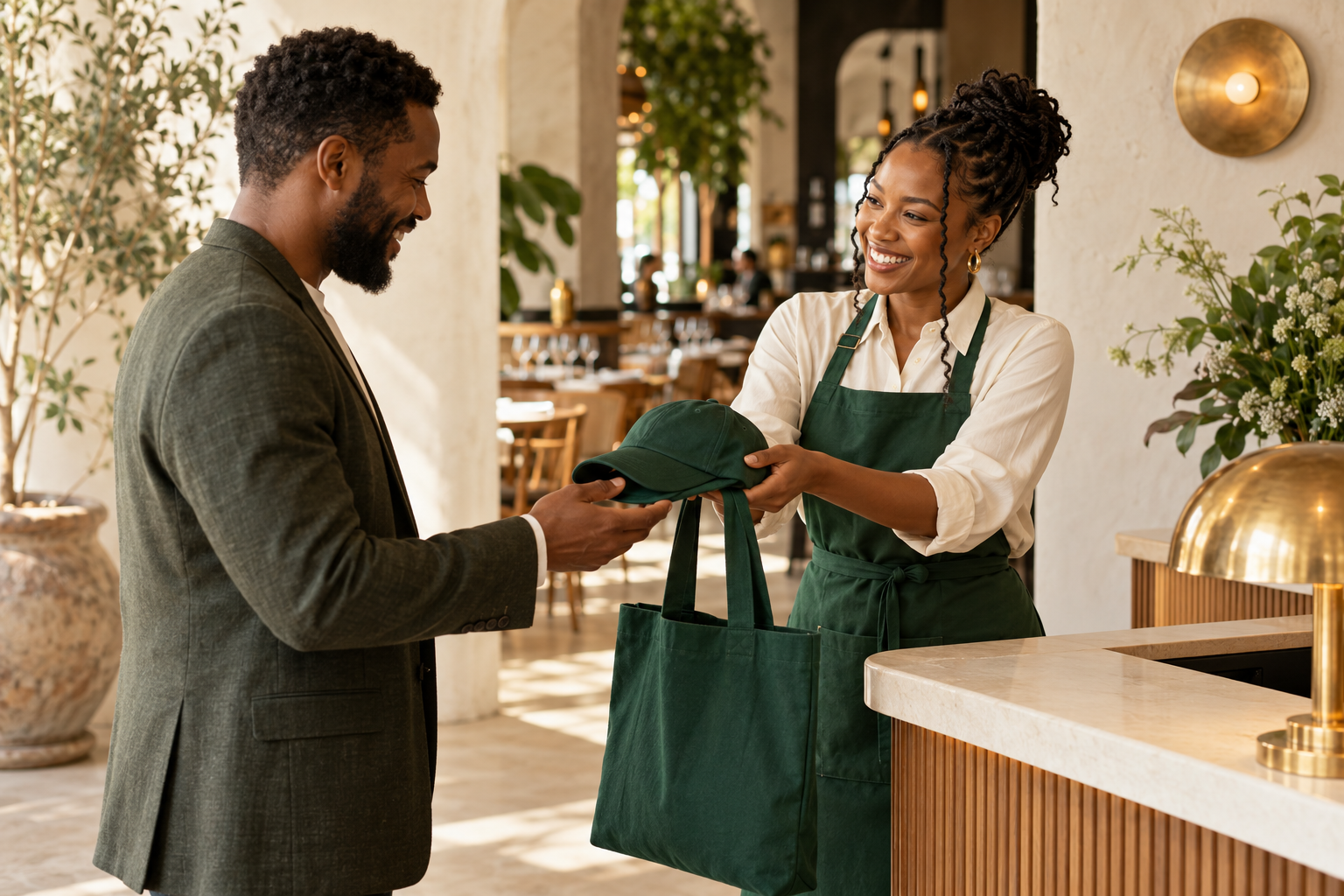
A tier could unlock a cap or tote, while a separate milestone provides a voucher or bill discount. Decide whether merchandise is a once-off welcome to the tier or a repeatable benefit. Stock, collection and fulfilment need a clear owner; an earned benefit should never be an unexplained promise.
Fit the front-of-house routine.
The first ZAR merchant workflow uses a staff web page beside the till. Staff identify a member by cell number or optional card and record qualifying purchases. For a pilot, agree how bills are attributed when guests split a table, whether tips or excluded items count, and who may correct an entry. Direct till integration is a later stage.